Winter PM tips to help keep trucks on the road
Key Highlights
- During winter, many truck components tend to face added strain, including vehicle batteries, tires, cooling systems, and more
- To help keep trucks on the road, technicians running preventative maintenance on trucks working in colder weather should be sure to look out for ice on truck batteries and pressure changes in tires
- Air dryer maintenance is also critical, with technicians and drivers training truck wet tanks daily, if possible, to avoid frozen air lines and no air pressure for brakes
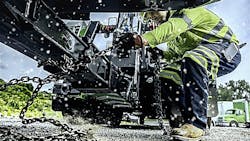
Winter can be a stressful time for many, from the flurry of activity surrounding the holidays to the sudden drop in temperatures. And in the transportation industry, trucks feel this stress just as much as their human drivers.
“Just think of all the systems on your vehicle that are strained more by extreme cold weather,” noted Mike Hagaman, sr. manager, client relationship management at FleetNet America by Cox Automotive.
In particular, he noted that batteries and cooling systems tend to be strained by frigid temperatures, both of which can land a driver at the roadside if an issue comes up. But this doesn’t have to be the case. After all, as long as drivers and technicians keep up on their regular pre- and post-trip checks and their preventative maintenance, no one needs to be left out in the cold.
“These are not hard things to do,” Hagaman noted. “Just be diligent about, let's say, four or five main things.”
For Hagaman and Jeff Greenwell, sr. vehicle services trainer with Fleet Services by Cox Automotive, some of those main inspection items include batteries, tires, and air dryers.
Batteries
For battery maintenance during winter, basic starting places include load-testing batteries to make sure they’re up to snuff and checking for corrosion and contaminants on connectors, Hagaman said.
But one issue that tends to be overlooked when trucks come in for their winter PMs, Greenwell noted, is ice on the batteries. This issue can be particularly dangerous if a vehicle needs a jump-start.
“Depending on where the ice is located and the amount of ice, if you go to jump-start a battery, they can actually explode,” Greenwell commented.
Plus, when jumping a vehicle, technicians should be aware of any related shortage issues, Hagaman added.
“You've got to be careful, because the onboard computers, the ECMs and stuff on these trucks are so sensitive to voltage jumps, you can damage a lot of electronics on a truck in a hurry,” he said.
Tires
Tires are already one of the top five causes of roadside breakdowns, where they accounted for 31-43%, according to a survey by FleetNet by Cox Automotive. But during winter, tire PM is even more important as the cold weather can cause drops in tire pressure.
“Punctures and things like that will happen to a tire that's low on inflation and, of course, you're going to get at least about a 10 to 15% drop in air pressure just with temperature changes from warm weather to cold weather,” Hagaman explained.
This low-pressure issue due to the weather can be even more dangerous for vehicles that travel through states with chain laws, where having the right psi is critical before chaining up.
“If you're down too much on air, you're going to have a problem keeping [chains] secured as well as you can, because you don't want one of those chains coming off at speed,” Hagaman added.
So, during pre- and post-trip checks and PMs, both drivers and technicians should be sure to log tire pressure and make sure that there’s no uneven tread wear, which could signal a problem.
Air dryers
Another sneaky maintenance item that drivers tend to miss is their air dryer.
“One of the things that we definitely run into is draining wet tanks,” Greenwell said. These tanks are meant to collect water and condensation from a brake system, which helps keep a truck’s brakes from freezing.
But these tanks have to be emptied, and according to Greenwell, “The amount of times that does not happen is very high.”
To avoid being stranded at the roadside, he said drivers should drain their air dryer tanks on a daily basis, or else risk damaging the truck’s air dryers and ending up with frozen brake lines.
Minding the little details
Beyond these main items, Greenwell said that techs need to check trucks’ fuel levels, tire tread depth and inflation, make sure there’s no leaks, and make sure the defrost and heating elements are working properly.
As well as this, making sure that windshield wipers are well stocked with fluid that can handle extreme cold will make a driver’s life easier, as will checking that the wipers work before a driver leaves the yard. And Hagaman reminded technicians to wash out their radiators, too.
“It'll surprise you how many trucks you'll get running hot in cold weather, because something's blocking up the radiator,” Hagaman noted.
Finally, Hagaman said that lubrication can help cold, stiff truck components work throughout the cold months.
About the Author
 Alex Keenan
Alex Keenan
Alex Keenan is an Associate Editor for Fleet Maintenance magazine. She has written on a variety of topics for the past several years and recently joined the transportation industry, reviewing content covering technician challenges and breaking industry news. She holds a bachelor's degree in English from Colorado State University in Fort Collins, Colorado.