ZF, Qualcomm team up on ADAS platform
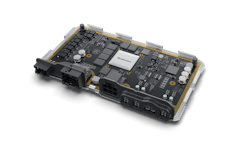
ZF and Qualcomm Technologies have announced a collaborative ADAS computing solution that combines ZF’s ProAI automotive supercomputer with Qualcomm’s Snapdragon Ride platform. The goal is to provide automakers with a scalable, open ADAS platform that can be deployed across multiple vehicle platforms and automation levels, ranging from basic safety functions up to Level 3 automated driving.
At the core of the joint project is ZF ProAI, a central vehicle computer that can serve as a domain, zonal, or centralized controller. In its highest configuration, ProAI delivers more than 1,500 TOPS of compute power and is designed to handle sensor fusion, computer vision, and decision-making either as separate functions or within a single end-to-end AI model. For fleets, this consolidation could reduce the number of discrete ECUs in a vehicle, which could in turn simplify diagnostics, wiring complexity, and future upgrades.
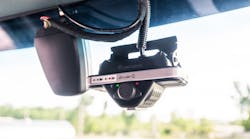
The integration with Qualcomm’s Snapdragon Ride Pilot and Vision stack uses camera-based AI perception for object detection, lane and sign recognition, parking assistance, driver monitoring, and real-time mapping. Configurations range from a single forward-facing camera to multi-camera surround systems, with radar integration to improve performance in complex driving scenarios. Qualcomm says the Ride Pilot safety stack is already deployed in more than 60 countries.
ZF adds its own ADAS software portfolio, including about 25 safety, comfort, and parking functions, which can be selected modularly by vehicle platform. These functions are also available as stand-alone software, aligning with the broader shift toward software-defined vehicles and over-the-air updates.
The open architecture and OTA capability have maintenance implications as well. The platform is designed to support third-party software integration, dynamic allocation of compute resources, and ongoing feature updates over a vehicle’s lifecycle. That could translate to fewer hardware retrofits, more software-based feature changes, and a greater need for technician training around calibration, diagnostics, and software management.